How Norweco Singulair Green Helps Meet Wastewater Needs in Wantage NJ
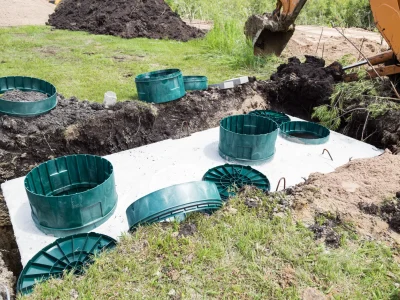

Wantage is the kind of place where onsite wastewater treatment is not a side issue. It is part of how a property works day to day. In a rural township with scattered development, larger lots, and many homes outside centralized sewer service, the septic system is not hidden infrastructure in the abstract. It is a practical piece of the property, just as real as the well, driveway, grading, and drainage.
That matters because wastewater planning in northwestern New Jersey can get complicated fast. A homeowner may be dealing with a replacement system on an older lot, a new home site with difficult soils, or a renovation that changes the expected flow. The land itself often drives the decision. Rock close to grade, seasonal groundwater, slope, and limited area for dispersal can narrow the menu of workable options. In those situations, advanced treatment units often enter the conversation, and one name that comes up often is the Norweco Singulair Green.
When people search for norweco singulair green Wantage NJ, they are usually not looking for marketing language. They want to know whether the system can solve a real site problem, how it fits into local approvals, what ownership is like after installation, and whether the extra complexity earns its keep. Those are the useful questions, and they deserve straight answers.
Why advanced treatment comes up in Wantage
Traditional septic systems are simple in concept. Wastewater leaves the house, solids settle in a septic tank, and partially treated effluent moves to a soil-based dispersal area where final treatment occurs. On a generous lot with suitable soils and enough vertical separation from limiting zones, that model works very well and has for decades.
The challenge is that not every lot offers those conditions. Older properties may have been developed under different standards. Some parcels have constrained building envelopes. Additions, finished basements, accessory spaces, and year-round occupancy can increase expected wastewater flow compared with the original design assumptions. Even before a shovel hits the ground, the site may be telling the designer that a conventional setup is a poor fit.
That is where advanced treatment earns attention. Systems like the Norweco Singulair Green treat wastewater to a higher level before it reaches the disposal field. In plain terms, the effluent leaving the treatment unit is typically much cleaner than what leaves a standard septic tank. Cleaner effluent can reduce the burden on downstream soil treatment and, depending on the approved design and local regulatory path, help a property pursue solutions that would otherwise be difficult.
In a place like Wantage, this is not a theoretical benefit. I have seen many rural and semi-rural New Jersey projects where the difference between a buildable, approvable design and a stalled plan came down to how much treatment could be achieved before disposal. Advanced treatment does not erase site limitations, and it is not a loophole around engineering. What it can do is give the designer better wastewater quality to work with, which opens up more refined solutions.
What the Norweco Singulair Green actually is
The Norweco Singulair Green is an aerobic wastewater treatment system. That phrase sounds technical, but the core idea is straightforward. Instead of relying mainly on passive settling and anaerobic breakdown inside a septic tank, an aerobic system introduces oxygen and creates conditions where aerobic bacteria can do a more thorough job treating the wastewater.
That process generally produces effluent with lower levels of organic matter and suspended solids than a standard septic tank alone. For the property owner, the significance is less about lab terminology and more about performance. A cleaner discharge can be an asset when the site needs more treatment up front because the soil conditions, available area, or design constraints demand it.
One reason this product line has staying power in the onsite industry is that it is not built around novelty. The design philosophy is mature. Treatment occurs through staged processes inside a compact treatment train. Like any mechanical wastewater unit, it depends on proper sizing, sound installation, power, and regular service. It is not magic, but when it is used in the right context, it is a practical tool.
That distinction matters. Homeowners sometimes hear “advanced system” and picture a fragile, fussy machine that belongs in a laboratory rather than a backyard. The better way to think about it is this: it is still an onsite wastewater system, but it asks for more oversight because it is doing more treatment work before disposal. That trade-off can be well worth it on difficult sites.
The local fit: where it makes sense in Wantage
Wantage has the kind of development pattern that often produces septic design challenges. Some lots are broad and forgiving. Others look roomy until the testing starts and the available area shrinks because of topography, setbacks, wells, property lines, drainage patterns, or subsurface conditions. In Sussex County, rocky ground is not rare. Neither are seasonal wetness issues in certain areas. Those factors can complicate both new installations and replacements.
A Norweco Singulair Green system can be a strong candidate when the project needs higher-quality effluent to support the overall design approach. That could include a replacement on a constrained property, a site where the engineer is trying to maximize viable disposal options, or a project subject to environmental review that calls for tighter wastewater performance. The exact path depends on the site investigation, soil logs, percolation data where applicable, local health department requirements, and the engineer’s design.
It is also useful in another common real-world scenario: the older home that no longer matches its original septic assumptions. A house built decades ago may now have more bathrooms, more regular occupancy, and more water use than the original system was meant to handle. If the existing system is failing or nearing failure, a replacement design has to satisfy current standards, not old ones. That is often where homeowners discover that a “simple tank swap” is not on the table. The site may need a more sophisticated answer.
Better treatment is only part of the answer
It is easy to overstate what any treatment unit can do. Even a strong product installed by a competent contractor cannot rescue a poor design. Wastewater systems succeed when the treatment unit, pump package if needed, controls, disposal field, reserve area, grading, and stormwater patterns all work together.
That is why the best Norweco projects I have seen share a few traits. The site work is honest, not optimistic. The engineer designs to the actual conditions, not the hoped-for conditions. The installer is comfortable with advanced systems and follows the plans closely. The owner understands that service is part of ownership. When those elements line up, advanced treatment can be a practical long-term solution rather than a recurring headache.
This point is especially important for homeowners comparing price tags. A conventional system often looks less expensive at first glance, and on an easy lot it usually is. But on a constrained property, forcing a conventional approach can trigger other costs, longer disturbance, more import of select fill, larger disposal footprints, or a design that is simply not approvable. Seen in that light, the economics shift. The relevant comparison is not “advanced versus basic” in the abstract. It is “what system can actually be approved, installed, and maintained responsibly on this lot.”
How the system can help with difficult soil and site constraints
The phrase “difficult site” covers a lot of ground. Sometimes the issue is shallow depth to a limiting zone. Sometimes it is available area. Sometimes it is the need to protect nearby receptors such as wells, streams, or environmentally sensitive areas. The Norweco Singulair Green helps by improving effluent quality before it reaches the next stage of treatment and disposal.
That has several practical implications. Cleaner effluent tends to be easier on downstream components. It can help support designs that rely on pressure distribution or other controlled dosing methods. It may reduce the risk of rapid biomat overloading compared with lower-quality effluent entering the field, assuming the rest of the system is designed and operated correctly. It can also provide a more defensible treatment approach where regulators or reviewing professionals expect stronger performance.
Still, there is a judgment call here that experienced designers understand well. More treatment upstream does not always mean the entire project becomes simpler. In fact, it can mean more coordination because mechanical units require power, alarms, service access, and proper startup. On some sites, that is a very reasonable trade. On others, it may be an unnecessary layer if a conventional design already fits cleanly within the site’s capabilities.
That is why local context matters so much for norweco singulair green Wantage NJ. The right answer depends on the property, not on a product brochure.
Ownership is different from owning a conventional tank
One of the biggest mistakes homeowners make is assuming that all septic systems are functionally the same after installation. They are not. A conventional septic tank with a gravity disposal area is mostly passive. It still needs pumping and sensible water use, but there are fewer moving parts. An aerobic treatment unit like the Norweco Singulair Green asks for more active stewardship.
That does not mean it is burdensome. It means the owner should expect periodic service, inspection of components, and attention to alarms or abnormal operation. If the house loses power, that matters to the treatment unit. If a blower or other component stops working, it needs prompt attention. If someone treats the system like a garbage can for wipes, grease, solvents, or harsh chemicals, performance will suffer.
In practice, the homeowners who do best with advanced systems are the ones who accept this early. They do not resent the service schedule because they understand why it exists. They keep records. They ask what the alarm panel means. They know who to call if something looks off. Once those habits are in place, ownership becomes routine.
A simple way to frame it is this: a conventional septic system is more forgiving of neglect right up until it is not. An advanced treatment unit is less forgiving of neglect, but it often gives you more warning and more service touchpoints before a major failure develops.
What installation quality looks like
A strong installation is usually quiet in the best sense of the word. The contractor does not improvise critical details in the field. Tank elevations make sense. Access risers are set where future service can happen without excavation. Electrical work is neat and protected. If pumps and floats are part norweco singulair green Wantage NJ of the design, they are mounted cleanly and tested. Final grading keeps surface water moving away from treatment and dispersal components rather than into them.
That may sound ordinary, but these details determine whether the owner has a straightforward experience or years of avoidable nuisance issues. I have seen advanced systems undermined not by the treatment technology itself, but by rushed site work and poor coordination between trades. A perfectly good unit cannot overcome a lid buried too deep for practical access or stormwater repeatedly routed toward the disposal area.
In Wantage, seasonal timing can also affect outcomes. Wet spring conditions can complicate excavation and backfilling. Cold-weather installation is possible, but crews need to protect components and avoid sloppy site restoration that channels runoff where it should not go. These are jobsite realities, not product flaws, yet they shape the owner’s impression of the system for years.
The approval side in New Jersey
No responsible discussion of onsite wastewater in New Jersey should glide past approvals. Systems are governed by state rules and local oversight, and advanced designs require proper engineering and permitting. The exact pathway can vary depending on whether the project is a repair, alteration, or new installation, and what kind of treatment and disposal methods are proposed.
For the homeowner, the practical takeaway is that this is not a box-store purchase. You begin with site evaluation and engineering, not with a brand decision in isolation. If the engineer concludes that a Norweco Singulair Green is a good fit, that recommendation should be tied to the site data and the regulatory requirements. That is the right order of operations.
It also helps to ask a direct question early: what obligations continue after approval? Some advanced systems come with operation and maintenance expectations that are more formal than what owners are used to with old septic systems. Understanding that before installation prevents friction later.
Cost, value, and the false economy of going cheap
Price matters. It always does. Advanced treatment systems generally cost more up front than a basic septic tank setup, and there are ongoing service costs to factor in. There is no point pretending otherwise. But cost should be evaluated in the context of the property’s actual constraints and the likely life-cycle outcome.
A cheap design that barely squeezes onto a difficult lot can turn expensive fast if it performs poorly, requires repeated service calls, or shortens the life of the disposal area. By contrast, a well-designed advanced system may cost more at installation but deliver better treatment, more stable operation, and fewer unpleasant surprises. That value is hard to appreciate when comparing bids line by line, but owners feel it later.
I have had conversations with property owners who initially resisted advanced treatment because they viewed it as overengineering. A year after permit review and redesigns, many of them came around. Not because the technology became glamorous, but because the site constraints were real and the more robust solution started to look like the more practical one.
How to tell if this is a serious option for your property
If you own a home or lot in Wantage and are exploring wastewater options, the right first step is not to ask whether the Norweco Singulair Green is “the best system.” That question is too broad to be useful. A better question is whether your specific property would benefit from advanced treatment as part of an engineered solution.
The answer usually becomes clearer once there is actual site information on the table. Soil conditions, available area, setbacks, house size, planned occupancy, and existing constraints all matter. A capable local engineer or septic designer can tell you whether an advanced treatment unit is likely to help, whether it is necessary, or whether a simpler approach remains viable.
If advanced treatment does make sense, ask practical ownership questions before approving the design. Who services the system locally? How often is routine maintenance expected? What are the likely electrical and service considerations? How accessible will the components be after landscaping is complete? Those are the questions that separate a good decision from an expensive guess.
Living with the system over the long term
The long-term picture is where advanced wastewater decisions either justify themselves or do not. On a difficult lot, the best systems are the ones owners stop thinking about most of the time because they are doing their job quietly. That outcome depends less on branding alone and more on fit, installation quality, and maintenance discipline.
For many properties in Wantage, the Norweco Singulair Green can be part of that quiet success. It is particularly relevant where a conventional approach does not comfortably fit the land or the regulatory framework. It provides a higher level of treatment, which can give engineers more workable options and owners a path forward where choices are otherwise narrow.
What it does not offer is a shortcut. It will not compensate for careless water use, ignored service needs, or sloppy site design. Like most good infrastructure, it rewards realistic expectations. Used that way, it can be a strong answer to the kind of wastewater challenges that are common in rural New Jersey.
For homeowners researching norweco singulair green Wantage NJ, that is the most grounded way to think about it. Not as a miracle device, and not as unnecessary complexity, but as a practical tool for the right properties. In onsite wastewater, that kind of fit is what matters most.
Excavating New Jersey LLC
406 County Rd 565
Wantage, NJ 07461, United States
Phone: +1 (973) 791-4284
FAQ About norweco singulair green Wantage NJ
How does a Norweco septic system work?
Singulair Green uses aerobic biological treatment in a polyethylene tank, followed by settling and filtration. The treatment unit is one part of a complete wastewater system; the site design also determines how treated effluent is dispersed.
How much does a Norweco septic system cost in NJ?
A useful estimate requires a property evaluation. Excavation access, soil conditions, engineering, electrical work, the disposal field, and restoration can affect the total. Ask Excavating New Jersey LLC for a written scope that distinguishes installation costs from ongoing service costs.
Are Norweco septic systems good?
Singulair Green is an established aerobic treatment option, but suitability depends on the property and proposed design. Compare the model's documented performance, maintenance needs, and total project scope with alternatives before deciding.
Ends · PAXTONYIBG438